
Virginia Traffic Court Records
Virginia traffic court records are public documents created when traffic violations are filed and processed through the state's General District Courts. You can search these records by name, case number, or hearing date using the Virginia Judicial System's online case portal, which covers courts across all counties and independent cities. Whether you need to look up an old ticket, check the status of a current case, or find out what is on file from a past traffic stop, this guide walks you through how to access Virginia traffic court records and what you will find.
Virginia Traffic Courts at a Glance
What Virginia Traffic Court Records Include
Virginia traffic court records are the legal documents and case files that courts create when someone is cited or charged with a traffic offense. These records cover moving violations, non-moving violations, and more serious charges like reckless driving. Law enforcement officers and Virginia State Police troopers issue the citations that start these records. Once a ticket is filed in the General District Court, a case record is created and held in that court's system.
Most traffic cases in Virginia are heard in the General District Court. That court handles traffic infractions, misdemeanor criminal charges, and civil matters. Traffic infractions are not criminal offenses in the way a felony or serious misdemeanor would be. However, certain traffic charges like reckless driving under Virginia Code § 46.2-852 are Class 1 misdemeanors, which means they carry potential jail time and stay on a criminal record if convicted. The record you can look up will show the charge type, hearing date, and outcome.
Records can be accessed through the online case search system or in person at the court clerk's office. Physical court files hold the original summons, any motions or pleas filed, and the final disposition of the case. Copies of these documents are available from the clerk. Anyone can ask for them. You do not need to prove any connection to the case.
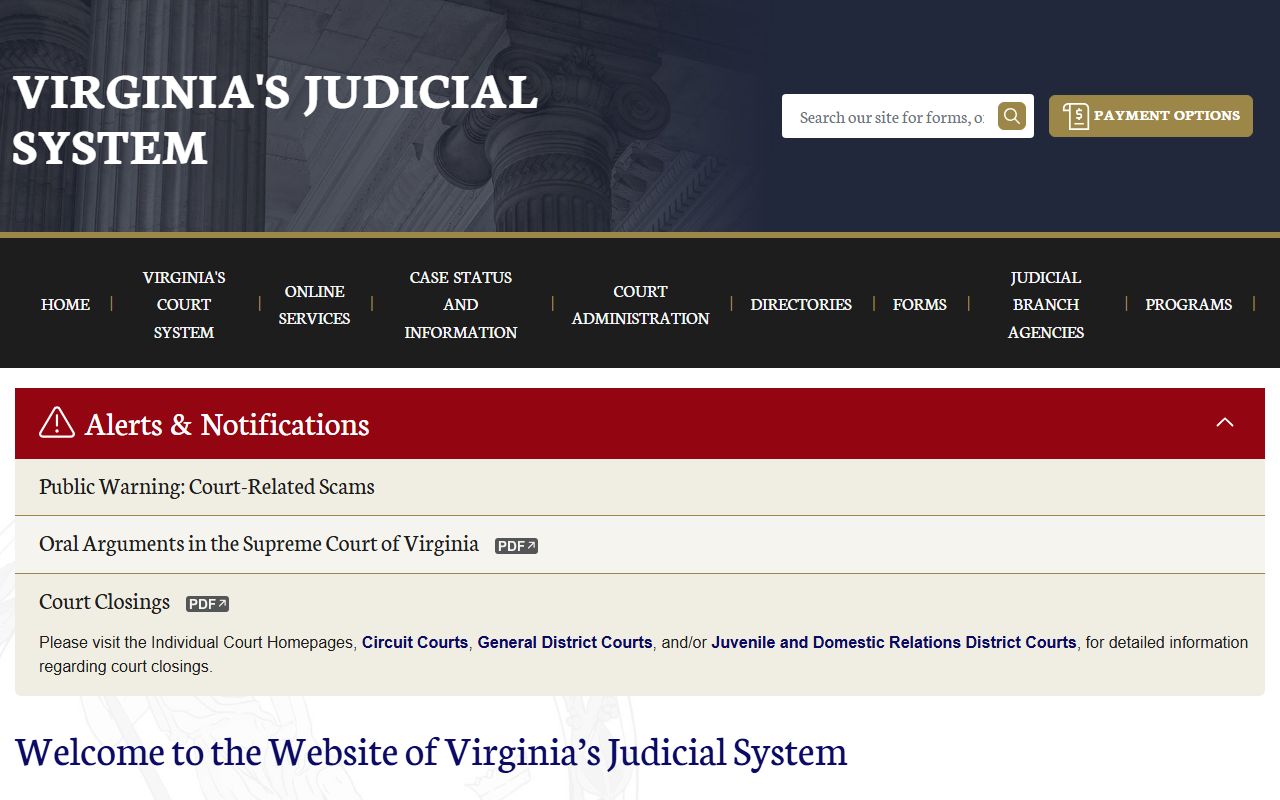
The official Virginia Judicial System website at vacourts.gov is the hub for all court-related searches in the state.
How to Search Virginia Traffic Court Records Online
The main tool for searching Virginia traffic court records online is the Online Case Information System, known as OCIS 2.0. You can find it through the Case Status and Information portal. It covers traffic and criminal case information from General District Courts across the state, as well as select Circuit Courts. Search by name, case number, or hearing date. The system shows charge details, hearing dates, case status, and whether the case is eligible for online payment.
To search, go to the Case Information portal and select the court from the dropdown menu. You can search statewide or pick a specific county or city court. Enter the name exactly as it appears on the summons. The system does a name match, so spelling matters. If you get no results, try a variation or contact the court clerk directly. Court staff enter ticket data within about 10 business days of the citation being issued, so very recent tickets may not show up right away.
For Circuit Court cases, a separate search system handles those records. Civil and criminal Circuit Court cases can be searched through the Circuit Court Case Information system, also found on the vacourts.gov portal. Traffic violations rarely reach Circuit Court unless they involve an appeal from General District Court or a serious charge like felony hit and run.
Paying Virginia Traffic Tickets
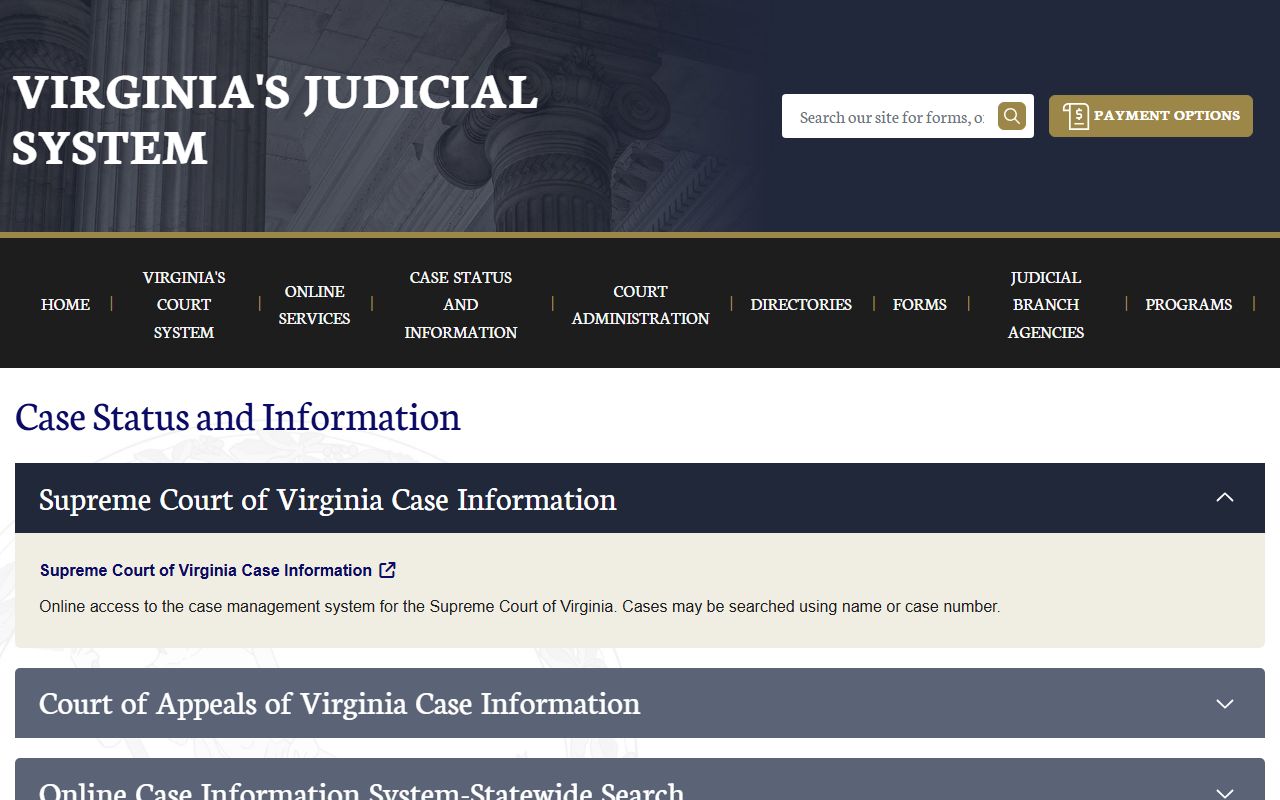
Virginia allows drivers to pay traffic tickets online, by mail, or in person at the court. Online payment goes through the General District Court Online Case Information System at vacourts.gov. Not every offense is eligible for online prepayment. The summons will show whether the offense is prepayable. If the ticket says you may avoid court by paying in advance, follow those steps to pay before your court date.
Be aware of what prepayment means. Paying a ticket before court counts as a guilty finding. Demerit points get added to your DMV record. The court cannot reverse that once you pay. A 4% convenience fee applies to all credit and debit card transactions, whether you pay online, by phone, or in person.
Pre-court online payments must be completed no later than 3:30 p.m. on the business day before your court date. Post-court payments can be made starting at 6 a.m. the day after your hearing. Drivers have 30 days after a conviction to pay fines and costs. Some courts give extensions if you ask. Mail payments go to the court listed on your ticket. Send the check or money order at least seven days before the court date to make sure it arrives on time. Payment is effective when the court receives it, not when you send it.
Virginia Traffic Violations and DMV Points
Virginia uses a demerit point system tied to traffic convictions. The Virginia Department of Motor Vehicles assigns points based on violation type, not the fine amount or the court. Courts decide guilt; the DMV handles points. Three-point violations are the least severe and include speeding 1 to 9 mph over the limit, failure to signal, improper turning, and driving without lights. Four-point violations cover speeding 10 to 19 mph over the limit, following too closely, and passing when unsafe. Six-point violations are the most serious and include driving while intoxicated, reckless driving, and vehicular manslaughter.
Points stay on your Virginia driving record for two years from the offense date. If you accumulate too many points in a short period, the DMV may require a driver improvement program or suspend your license. Convictions from Virginia courts are reported to your home state if you hold an out-of-state license. The DMV does not suspend licenses for failure to pay court fines under current law, but unpaid fines can go to collections with interest.
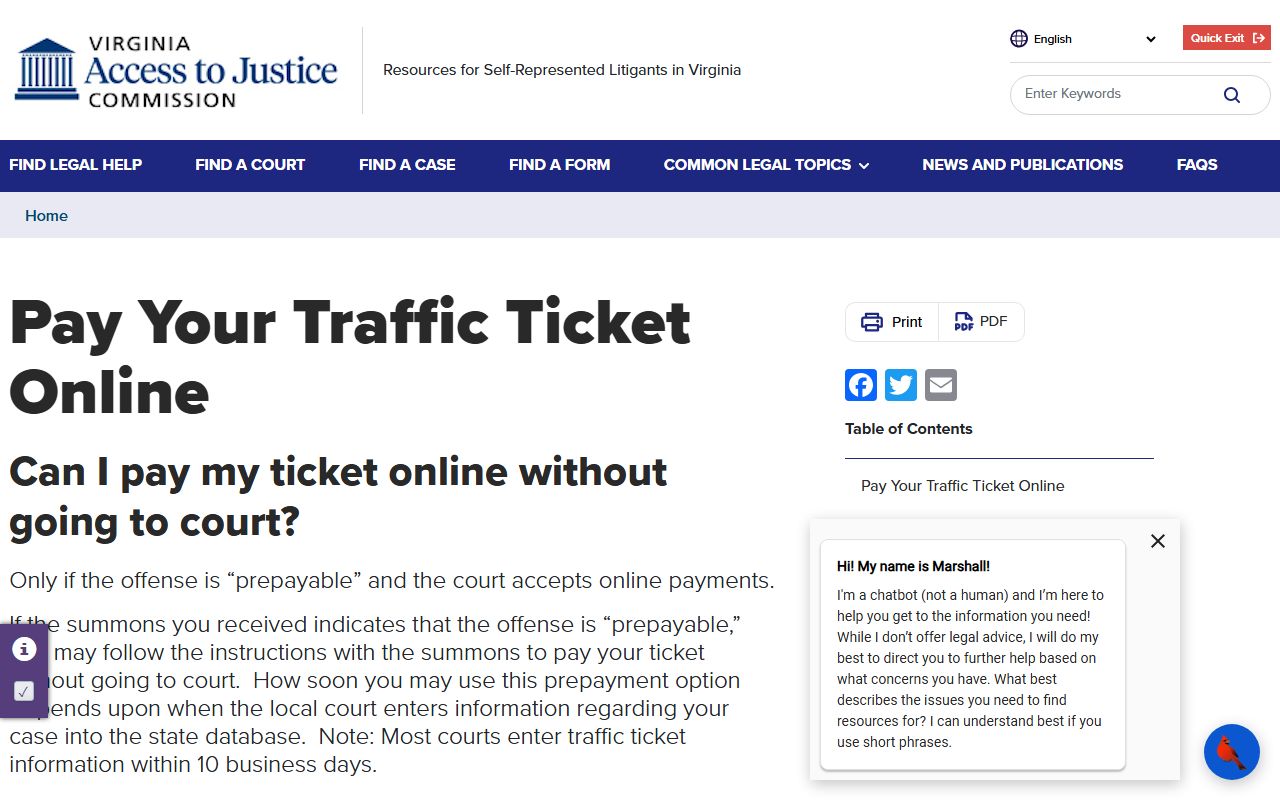
Driving records are separate from court records. The court records what happened in court. The DMV records what that conviction means for your license. To get your DMV driving history, visit dmv.virginia.gov or request it in person at a DMV customer service center. Online requests cost $8 for an uncertified copy. In-person or mail requests cost $9. Certified copies are $5 more. You will need to complete Form CRD-93 for mail requests.
Virginia Traffic Laws and Key Statutes
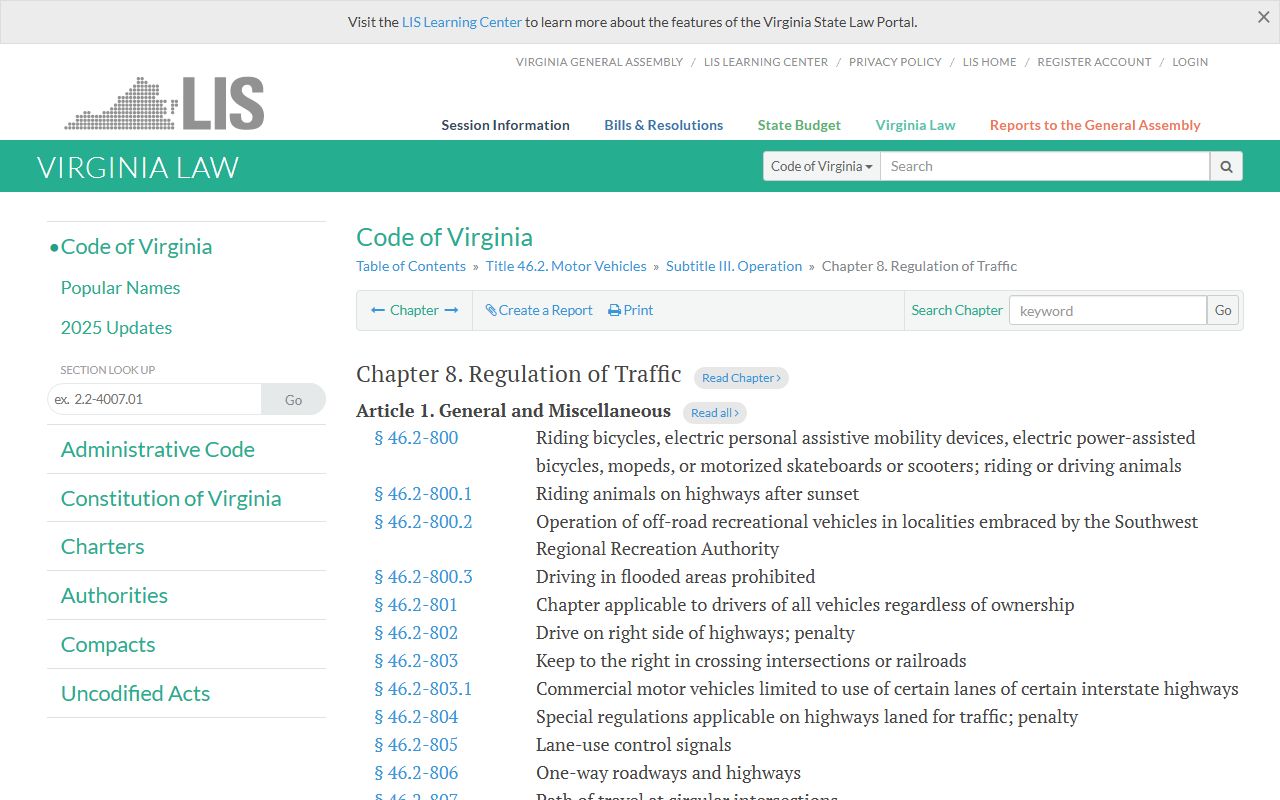
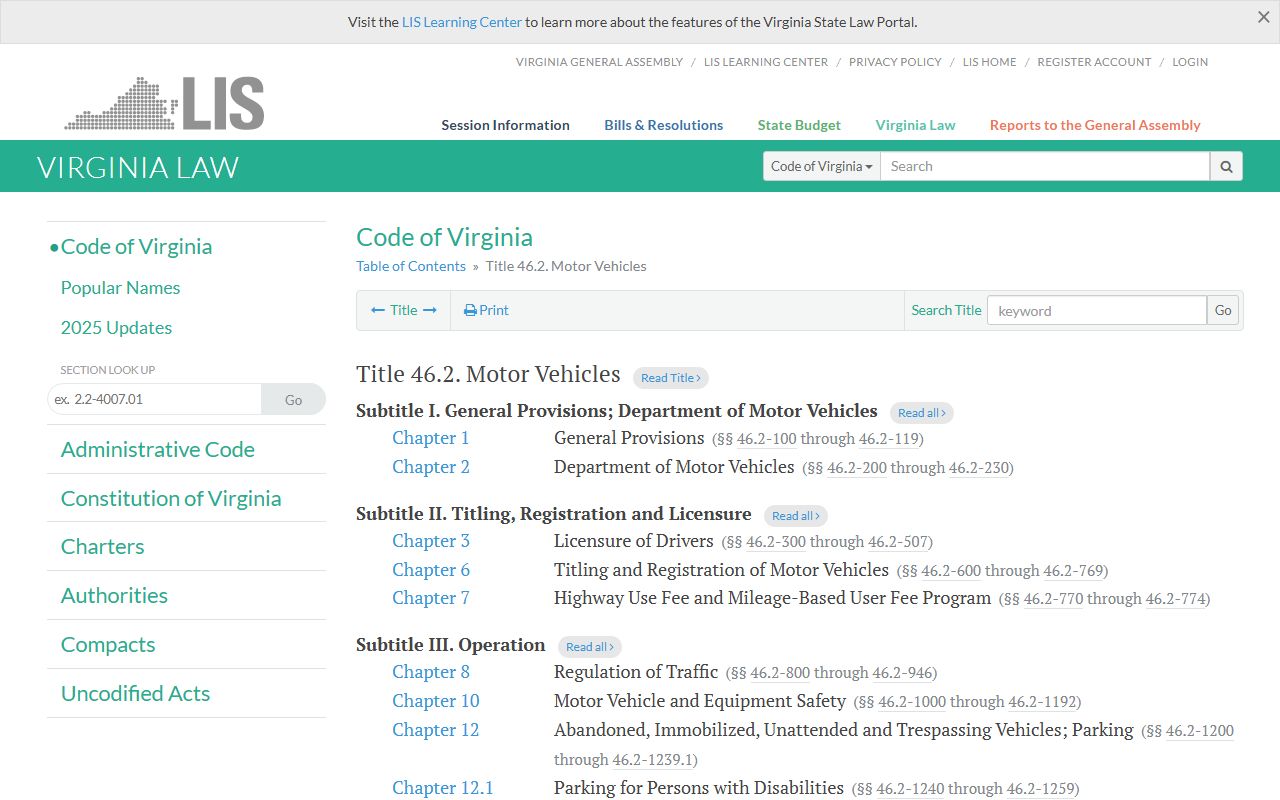
Traffic law in Virginia sits primarily in Title 46.2 of the Code of Virginia. This title covers all motor vehicle laws in the state, from vehicle registration to speed limits to reckless driving. It is organized into subtitles and chapters covering everything from the Department of Motor Vehicles to motor carriers. For traffic violations specifically, Chapter 8 is the most relevant section.
Chapter 8 of Title 46.2 covers the Regulation of Traffic. It includes speeding statutes at §§ 46.2-870 through 46.2-882.1, which set maximum speed limits and establish graduated penalties. Reckless driving is covered in Article 7 of the chapter. Under § 46.2-852, driving in a way that endangers life, limb, or property is reckless driving regardless of speed. Section 46.2-862 makes it reckless driving to exceed the speed limit by 20 mph or more, or to drive over 85 mph regardless of the posted limit. These are Class 1 misdemeanors in Virginia and create criminal court records, not just traffic infraction records.
Other notable statutes include § 46.2-818.2 on handheld device use while driving, § 46.2-830 on obedience to traffic control devices, and § 46.2-859 on passing a stopped school bus. Arrest authority for traffic matters falls under § 46.2-936, which allows arrest for misdemeanor traffic offenses with release on a summons.
Traffic Record Sealing in Virginia
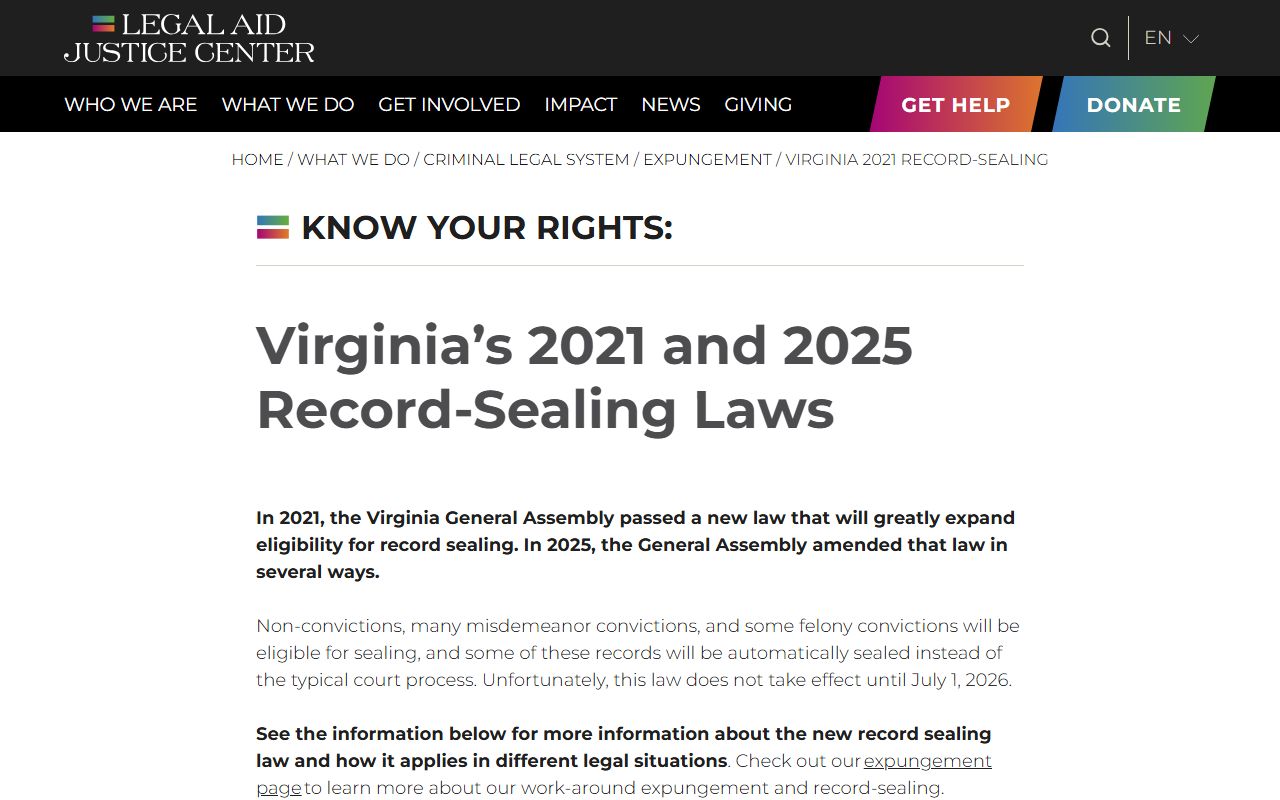
Virginia has made significant changes to how traffic records are sealed. Under the state's Clean Slate initiative, non-criminal traffic infractions are automatically sealed 11 years after the final disposition of the case. You do not need to file a petition or pay a fee for this to happen. The process is automatic. Criminal traffic offenses like reckless driving misdemeanors must be sealed through a petition process. Not every criminal traffic conviction qualifies.
Virginia Code § 19.2-392.2 governs expungement of police and court records. Charges that were dismissed, dropped, or resulted in acquittal may be eligible for expungement. A conviction for reckless driving or DUI generally cannot be expunged unless a pardon is granted. The new sealing law effective July 1, 2026 creates broader petition-based sealing options for certain convictions after sufficient crime-free waiting periods. Automatic sealing under that law begins October 1, 2026.
Once a record is sealed or expunged, public access is cut off. Most background checks will not find it. Courts and law enforcement can still access sealed records for specific legal purposes. The record is not destroyed but moved to a secure, restricted location.
For more on Virginia's Clean Slate law, Justice4All.org and Justice Forward Virginia both publish plain-language guides explaining eligibility, waiting periods, and the petition process.
Note: Traffic infractions are automatically sealed after 11 years under state law, but criminal traffic convictions like reckless driving require a separate petition process to be sealed.
Getting Copies of Traffic Court Records
To get a copy of a specific traffic court record, contact the court clerk in the county or city where the case was heard. You can visit in person, call, or in some courts submit a request by mail. Bring or include the full name of the defendant and the approximate date or year of the case. The clerk can search by name or case number and pull the file. Plain copies typically cost $1.00 per page for the first two pages and $0.50 for each additional page. Certified copies require an additional fee. Exact amounts vary by court.
Online searches through OCIS 2.0 let you view basic case information for free. The system shows the charge, hearing date, and disposition, but it does not provide document images for download. For the actual summons, motions, or court orders, you need to contact the clerk's office directly.
Some counties also provide access to Circuit Court records through the Virginia Courts' online system. Check the specific court's page on vacourts.gov to see what is available online for that jurisdiction.
Note: Copy fees vary by court. Call the clerk before visiting if you need certified copies so you can bring the right payment.
Browse Virginia Traffic Court Records by County
Traffic cases are filed in the General District Court for the county or independent city where the violation occurred. Select a county below to find local court information, contact details, and resources for traffic court records in that area.
Traffic Court Records in Major Virginia Cities
Virginia's independent cities each have their own General District Court that handles local traffic cases. Select a city below to find court contact information and resources for traffic records in that area.